Environmental Product Declarations grounded in robust Life Cycle Assessment
We support manufacturers and traders in the development of verified Environmental Product Declarations (EPDs), combining scientific rigor with practical experience in life cycle assessment. Our work focuses on delivering credible, transparent, and standards-compliant environmental information for products.
We deliver EPDs based on robust Life Cycle Assessment, supporting manufacturers and organizations in meeting regulatory requirements and communicating reliable environmental information for their products.
Our work focuses on clarity, transparency, and verification readiness throughout the entire EPD development process.
What We Do
We provide end-to-end support for the development of Environmental Product Declarations in accordance with EN 15804 and relevant Product Category Rules. Our involvement covers the full EPD process, from defining the methodological framework and system boundaries to life cycle modeling, documentation, and support during verification.
Each project is approached as a tailored study. We work closely with our clients to reflect the actual production processes, material composition, and data availability of the product under assessment, ensuring that the resulting EPD is both accurate and meaningful.
How We Work
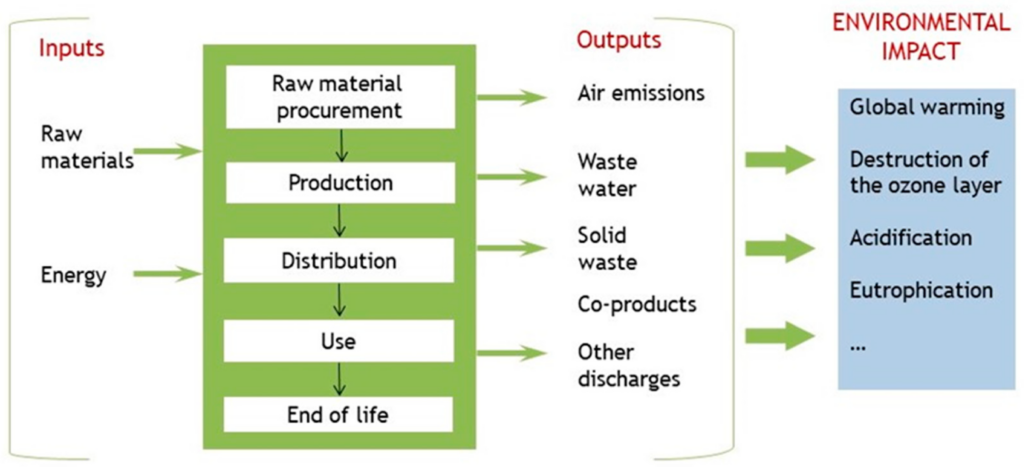
At LyCIS, we follow a structured, transparent, and collaborative workflow designed to ensure technical robustness, regulatory compliance, and practical value. Our approach combines scientific rigor with clear communication, supporting our clients throughout the entire Life Cycle Assessment (LCA) and Environmental Product Declaration (EPD) development process.
We place strong emphasis on data quality, methodological clarity, and documentation, ensuring that each project results in deliverables that are verification-ready and meaningful for environmental communication and long-term sustainability strategy..
- 1. Project Scoping & Alignment
We begin with a focused discussion to define project objectives, system boundaries, and intended use. Applicable standards and Product Category Rules are identified early to ensure alignment from the start.
2. Methodology Definition
A clear methodological framework is established in accordance with relevant standards. Key assumptions, allocation rules, and modeling approaches are documented before data collection begins.
3. Data Collection & Review
Primary and secondary data are collected using structured templates and reviewed for completeness, consistency, and representativeness. Data quality and assumptions are clearly documented.
4. LCA Modeling & Analysis
The life cycle model is developed using established LCA tools and databases. Environmental impacts are calculated and key contributors are identified and reviewed.
5. Documentation & Reporting
Results are documented in clear, verification-ready reports. For EPD projects, all required tables, disclosures, and methodological descriptions are prepared in line with applicable PCRs.
6. Verification & Finalization
We support the verification process by addressing reviewer comments and finalizing deliverables. Assistance is provided through registration and publication where required.
Our Expertise
Our expertise lies at the intersection of environmental assessment methodology and real-world industrial applications. We have extensive experience in Life Cycle Assessment studies supporting EPD development, environmental decision-making, and product sustainability communication.
We emphasize transparent assumptions, documented data sources, and methodological consistency throughout every study. This approach allows our results to stand up to critical review and supports their use in both verification processes and informed decision-making.
Academic Support & Experience
Our work is supported by an academic research environment, ensuring alignment with current scientific knowledge, standards, and methodological developments. This academic foundation strengthens the credibility of our studies and supports the continuous refinement of our assessment approaches.
As a small and highly specialized team, we combine academic insight with hands-on experience gained through collaboration with manufacturers and organizations across different product sectors. This balance allows us to bridge theory and practice effectively.